On Saturday evening, I met up with an old friend for dinner near Nanjing South Station.
We chose Zendai Himalaya Center, a sprawling commercial complex sitting right next to the transit hub. Before heading out, I assumed it would be buzzing with energy and vibrant neon lights—after all, it sits adjacent to the largest high-speed railway junction in Eastern China, an artery where hundreds of thousands of travelers pass through every single day.
Yet the moment we stepped inside, the scene caught me completely off guard.
1. An “Empty Citadel” by the Rail Hub
It was peak dinner time on a Saturday evening, but the mall felt almost eerily vacant.
Glancing across the corridors, most of the storefront shutters were pulled firmly down, leaving dark, hollow spaces behind glass facades. Only a handful of budget fast-food chains were open, their fluorescent lights humming in the quiet. Staff members idly scrolled through their phones, with barely a table or two occupied by diners. What had once been envisioned as a trendy urban landmark was now quiet enough that you could hear your own footsteps echoing across the polished floors.
After dinner, looking for a way to unwind, we took the escalator down to the basement level to play a game of pool.
The moment we stepped off the stairs, a chill swept over us. More than half the cavernous basement had its overhead lights completely shut off, saving electricity. Only a few dim lamps hung by the pool hall entrance at the far end of the hallway. With dark, winding corridors, locked iron gates, and bare concrete pillars, it felt more like an abandoned haunted house than a modern shopping plaza.
Standing in that shadowy atrium, the clash between grandiose modern architecture and profound vacancy felt surreal. If even a mega-complex sitting atop one of the nation’s premier transit hubs cannot hold off the receding tide of foot traffic, what does the rest of the landscape look like?
2. Shuttered Eateries and “Shop for Lease” Signs
One might still argue that the emptiness of a suburban rail mall comes down to tenant mix or architectural flow. But what happened this afternoon right in my own neighborhood brought that same chill uncomfortably close to home.
It was a crisp Sunday afternoon, and I decided to take a quiet stroll down the old neighborhood street near my apartment. This is an old-school residential avenue, typically overflowing with the warm hustle and bustle of everyday life, lined with small mom-and-pop restaurants that feed the local community day in and day out.
Craving something warm, I walked toward my go-to stone-pot bibimbap place. When I reached the door, I found it locked tight. Looking through the glass, the chairs were neatly inverted on the tabletops, and the kitchen was cold.
Having struck out there, I turned toward another favorite: a handmade dumpling shop tucked inside an alleyway. Their dumplings are packed with flavor, generously portioned, and fairly priced. Even during off-peak hours, it used to be packed with neighbors enjoying a quick bite.
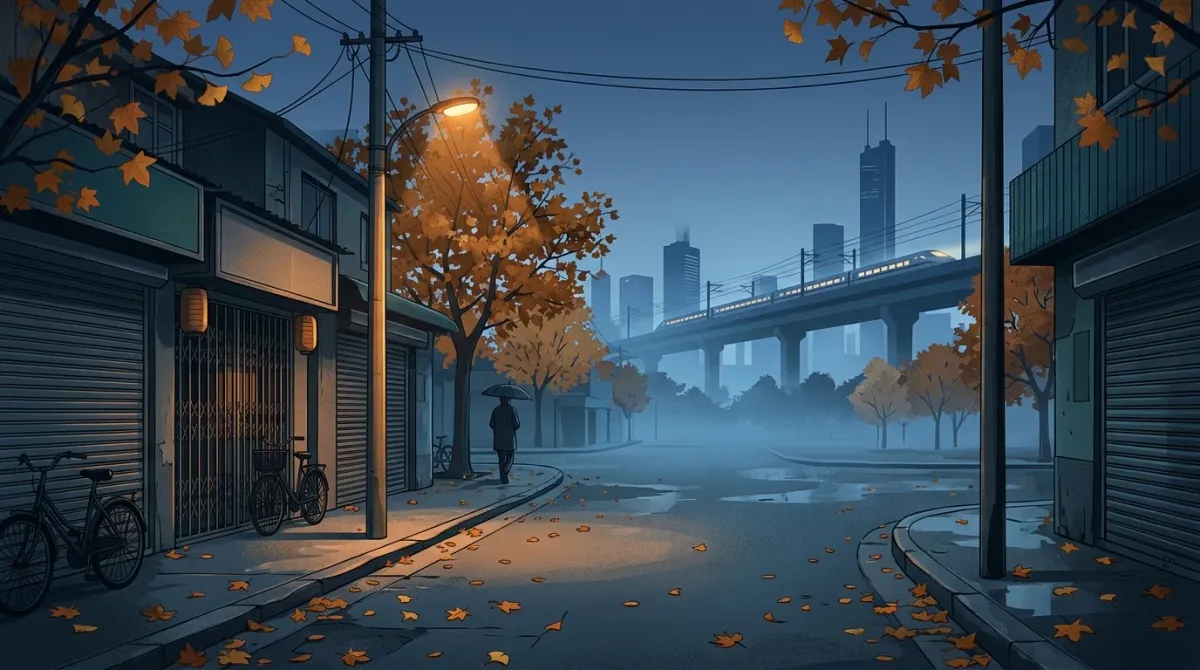
As I rounded the corner, my heart sank. The gray metal rolling shutter was completely drawn shut. Taped squarely across the center was a stark, printed paper sign: “Shop for Lease / Transfer.”
An autumn breeze swept through the yellowing plane tree leaves, swirling a few across the pavement in front of that locked gate. Standing there, an unmistakable sense of melancholy washed over me.
Macroeconomic indicators, GDP growth targets, and consumer price indexes often feel distant and abstract to everyday people. But when the neighborhood eatery you have frequented for years quietly vanishes without warning, and the small comforts of daily life are abruptly cut short by a paper lease notice, you suddenly realize: an economic downturn is never just a dip on a statistical chart; it is felt through the quiet shutting of doors and unceremonious goodbyes all around us.
3. As the Tide Goes Out, What Can We Still Do?
Standing on that street corner by the closed shop, I fell into deep thought.
For small business owners running brick-and-mortar stores, every sunrise brings rent, utilities, labor, and relentless bills. In this prolonged chill, many have exhausted their last reserves and have had no choice but to quietly bow out.
As software engineers and developers in the tech industry, are we really immune?
Looking back over the past decade, our generation of developers benefited immensely from an unprecedented tailwind: the smartphone boom, venture capital inflows, and nationwide digital transformations. Inside that fast-rising elevator, we often mistook the speed of the machine for our own sprint, forgetting that the real propulsion came from the engine beneath our feet.
Today, that engine has noticeably downshifted. Tech layoffs, hiring freezes, corporate downsizing, and the looming anxiety of the “35- or 40-year-old career ceiling” hang over knowledge workers everywhere.
Looking at that transfer sign, I couldn’t help asking myself: What can I still do in the years ahead? When a single primary job is no longer a guaranteed fortress, where lies the path forward for ordinary technical professionals?
Sighing and worrying won’t change the climate outside. When facing a long, cold cycle, the only viable answer is to adapt our survival strategy:
- Let go of illusions and lower leverage: Stop counting on windfall gains from a booming macro environment. Protect personal cash flow, trim frivolous spending, and ensure you and your family have a solid margin of safety.
- Move beyond the pure employee mindset and build independent footholds: Relying entirely on a single employer carries growing systemic risk. Dedicating spare hours to indie hacking, shipping niche SaaS tools for global markets, or cultivating a personal digital garden and knowledge base creates a self-sustaining lifeline directly tested by the open market.
- Double down on genuine, irreplaceable craft: In the face of AI acceleration and intense industry competition, the era of profiting off basic information asymmetry and routine code assembly is over. The true differentiator now lies in deeply understanding business problems, staying agile with emerging tools, and learning how to deliver end-to-end value with minimal overhead.
Autumn is settling over Nanjing, cooler with each passing day. Along the streets, shop shutters will continue to open and close, and life relentlessly marches on.
When a gust of historical wind blows past, an individual may feel as fragile as a speck of dust. Yet even as the temperature drops, so long as we hold a craft we can continually refine and tend a small garden of our own, we can still keep our own lantern burning through the longest winter.
