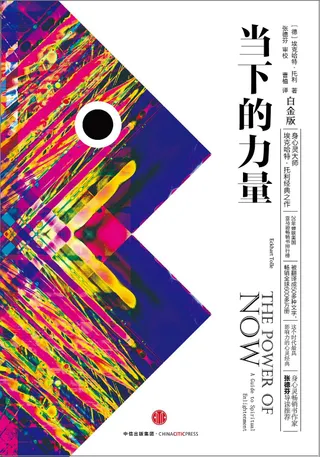
The Power of Now
Much suffering comes from over-identifying with thought; real change lies in returning to the present and living awake in this moment.
This is the eighth book of Zhou Zuoluo’s second reading club. It isn’t an easy read either; it keeps going round and round proving its title.
1. Overview
The Power of Now is one of Eckhart Tolle’s most representative works and a hugely popular book on personal and spiritual growth. It centers on one question: why, even though we are living in the present, are we constantly dragged around by past regrets and future anxieties?
The book argues that much of our suffering comes not from events themselves but from over-identifying with our thinking: replaying memories, constantly anticipating, endlessly draining ourselves. Tolle suggests that real change lies not in “thinking things through more clearly” but in “returning to the present”: bringing attention back to this moment and reducing unconscious mental reactions, which leads to a more stable inner state.
The Power of Now doesn’t just offer ideas; it also points to practice: how to observe your own thoughts, how to accept the present, and how to stay aware amid everyday relationships and stress. For modern people living with long-term anxiety, pressure, and emotional drain, the book offers a more practical path: gradually shifting from “being pushed along by thought” to “living awake in the present.”
2. Favorite Quotes
The sources and mechanics of suffering
- Being unable to stop the mind from thinking is the main cause of our suffering.
- Unhappiness and fear are ultimately created by the mind.
- Relationships do not cause pain and unhappiness; they bring out the pain and unhappiness already in you.
- All addictions arise from an unconscious refusal to face and move through your pain.
- A large part of human suffering is unnecessary.
- The Buddha said human suffering comes from desire or craving; to be free of suffering, you must be free of desire.
- Your pain has two levels: pain you create now, and pain from the past that still lives on in your mind and body.
- The degree of pain depends on how much you resist the present moment and how much you identify with your mind.
Thought and identification
- The mind is the most precious gift we have.
- Most people are not creative, not because they don’t know how to use their mind, but because they don’t know how to stop it.
- Only when you stop identifying with your mind does it lose its power, and Being reveals itself as your true nature.
- A negative attitude serves no purpose.
- Once you have a theory, it’s easy to find evidence to prove it.
The present, acceptance, and stress
- When you fully accept the facts of the present, all the drama in your life comes to an end.
- The more you accept the present, the less you suffer, and the freer you become from the egoic mind.
- In fact, only the present is truly precious. The more you focus on time, past and future, the more of the present you miss.
- Stress arises when you are “here” but want to be “there,” or are in the present but want to be in the future.
- If what you are doing doesn’t bring you joy, ease, and lightness, it doesn’t mean you need to change what you do; you need to change how you do it.
- Tomorrow’s bills are not the problem, nor is the body aging; losing the present moment is the real problem.
Awareness and perspective
- Darkness cannot recognize light; only light can recognize light.
- In daily life, don’t put all of your attention on the outside world and your thoughts; keep some attention within.
- Nothing is what it appears to be on the surface.
3. Summary
When I first started this book, I was completely drawn in by the title. At the time I was daydreaming about the future every day and found it hard to get down to the tasks in front of me. After just a few pages I felt energized and could more or less get on with what I needed to do. Further in, though, the author’s writing felt laborious and roundabout, and it took me over a month of on-and-off reading to finish.
Maybe my understanding just isn’t there yet. Plenty of people online recommend this book, and perhaps rereading it in a few years will feel different.