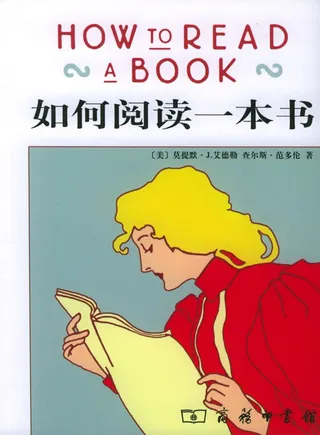
How to Read a Book
From elementary to syntopical reading: reading actively to keep the mind alive and growing.
This is the third book in this year’s Zhou Zuoluo book club. It was not easy to read. A few times I fell asleep while sitting in bed reading it on my Kindle. Without the book club, I might not have finished it.
I. Overview
This is a famous book that many people have heard of. I have a copy on my bookshelf, but unfortunately I had never picked it up and read it properly. Following the book club, I finally read it from beginning to end.
It is a guide to reading methods and techniques. Both people unfamiliar with reading and those just beginning to explore it can avoid unnecessary detours by reading this book.
II. Main Content
Here I draw on Dedao’s audio summary, because it organizes the material more clearly.
2.1 The Benefits of Reading
Why do people need to read? Why would we still need reading in conditions as harsh as being stranded on a desert island?
The authors’ answer is that the mind, or our ability to think, is like a muscle: without regular use, it atrophies. Reading is the most effective means of preventing mental atrophy and slowing mental aging.
2.2 Reading Techniques
Different books require different speeds. Not every book can be read at top speed.
More than three hundred years ago, the French thinker Pascal said: “Reading too fast or too slowly, we understand nothing.”
Before opening a book, keep these four questions in mind:
- First, what is this book about as a whole?
- Second, what does the author say in detail, and how?
- Third, is the book true—entirely or only in part?
- Fourth, what does this book have to do with you?
2.2.1 Elementary Reading
The first level is elementary reading. Anyone who is literate and understands the literal meaning of the words can do it; little more needs to be said.
2.2.2 Inspectional Reading
The second level is inspectional reading: in simple terms, grasping the text through a quick survey. It has two stages.
The first is systematic skimming. The suggested sequence is to examine the title, preface, and subtitle; study the contents and index; look at the author’s biography; and then turn to chapters related to the book’s subject and start reading. The difficulty is that this requires background knowledge. The more you read, however, the easier it becomes.
The second stage is a quick read-through. Whether or not you understand everything, go through the entire book from beginning to end. However little time you spend, this gives you a preliminary understanding of its category, subject, and content.
2.2.3 Analytical Reading
The third level, analytical reading, is more complex and the most systematic. It has three main stages.
First, determine its scope: what is the book about? Identify the subject and classification—for example, literature, history, or economics. Summarize the whole book briefly, list its important sections, and identify the problems the author wants to discuss.
Second, understand the content: how has the author constructed the book? Identify recurring keywords, mark important sentences, extract the central ideas, and use notes to reconstruct the book’s chain of reasoning.
Third, evaluate it: how good is the book? Whatever you read, you must form a judgment and have your own position. Only after evaluating a book have you truly finished reading it.
2.2.4 Syntopical Reading
The fourth and highest level is syntopical reading: essentially, following clues to find books on a subject that interests you. It requires greater initiative and judgment.
Its essence has two stages.
First comes preparation. Create a reading list related to your subject, using library catalogs, bibliographies and indexes in books, and relevant online searches. Then quickly survey every book on the list to determine which are relevant.
The second stage is syntopical reading itself. It involves five steps:
- Survey the selected books and find the most relevant chapters.
- Establish a vocabulary of key terms based on your subject.
- Develop a relatively objective position of your own and list the questions you want answered.
- Distinguish major from minor questions; collect the different answers to each and list them under the corresponding question.
- Analyze the questions and arrange your own questions and answers in an order that brings your subject into focus.
On syntopical reading, I also recommend an article by Li Xiaolai. (The original note did not include its link.)
III. Selected Passages
- To fulfill all the purposes of reading, use appropriately different speeds for different books.
- The foundation of good reading is active reading. The more active it is, the more effective it becomes.
- No learning should lack vitality, just as no reading should be lifeless.
- Ask questions while reading—questions you must try to answer yourself as you read.
- Making notes in a book is a way of expressing where you agree or disagree with the author.
- As long as unresolved ambiguity remains in a conversation, communication has not been achieved, or at least has not been achieved as well as possible.
- Doubt is the beginning of wisdom. Learning from books is like learning from nature.
- Great classics help you think more clearly about these questions because their authors think more deeply than most people.
- Good reading—that is, active reading—is useful not only for reading itself or for our work and careers. It also keeps our minds alive and growing.
IV. Conclusion
Last night I saw a short video whose message was roughly this: everyday monotony can extinguish all ambition. Keep reminding yourself that difficult things bring rewards. Do hard things and things you have never done, or you will be submerged in routine. Keep learning, improving, and challenging yourself; only through that process can your life truly blossom.
Reading is the same. Read things “slightly above us,” keep challenging yourself, and try inspectional and analytical reading, eventually reaching syntopical reading instead of remaining at the elementary level forever. Only then can we truly experience the pleasure of reading.